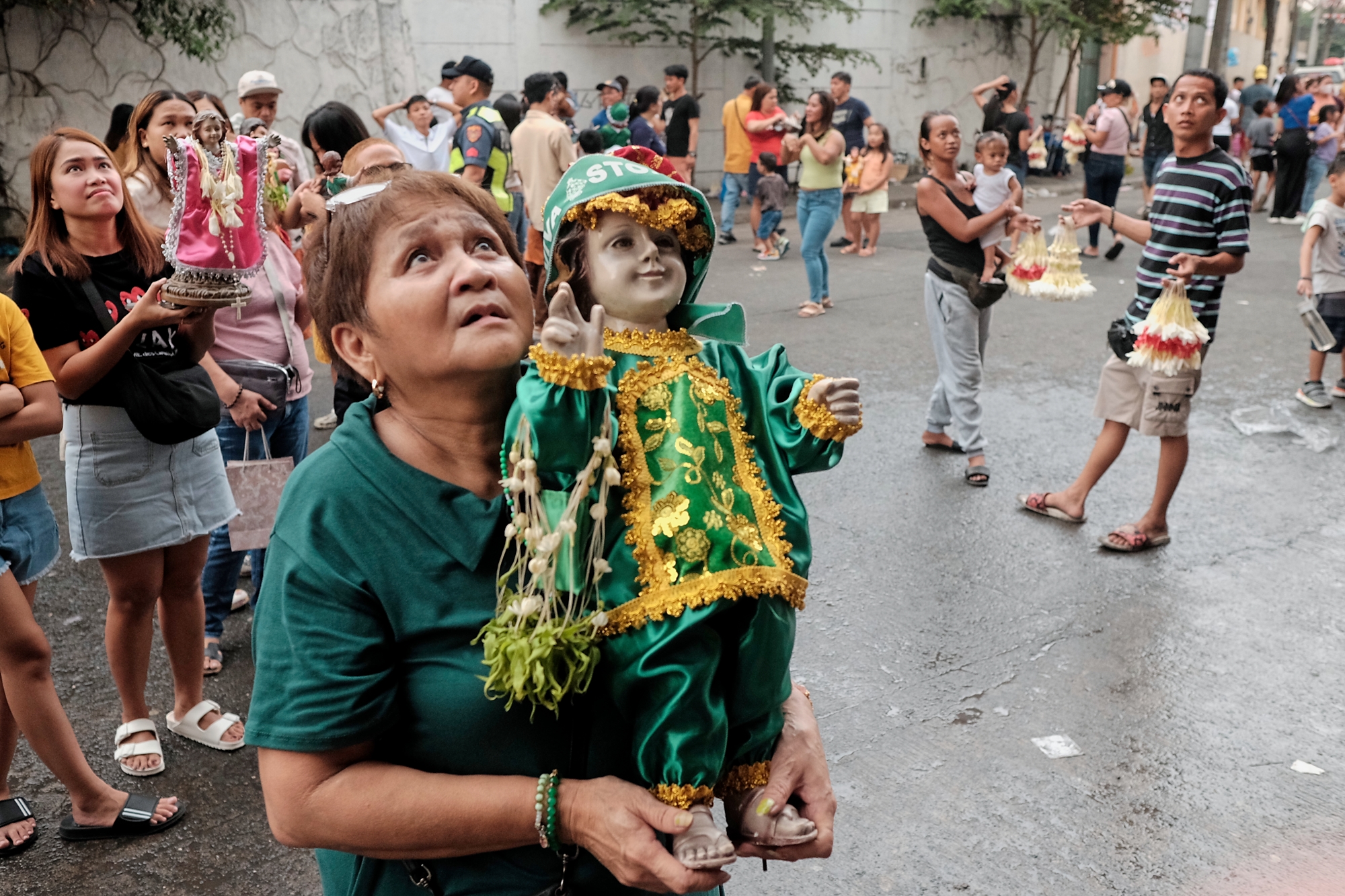
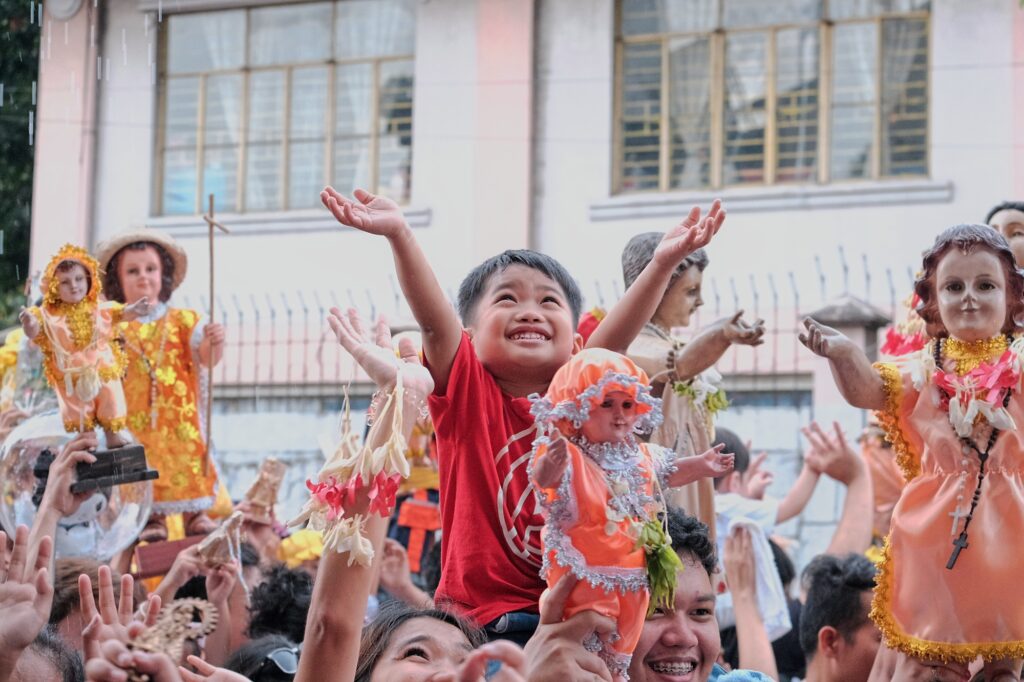
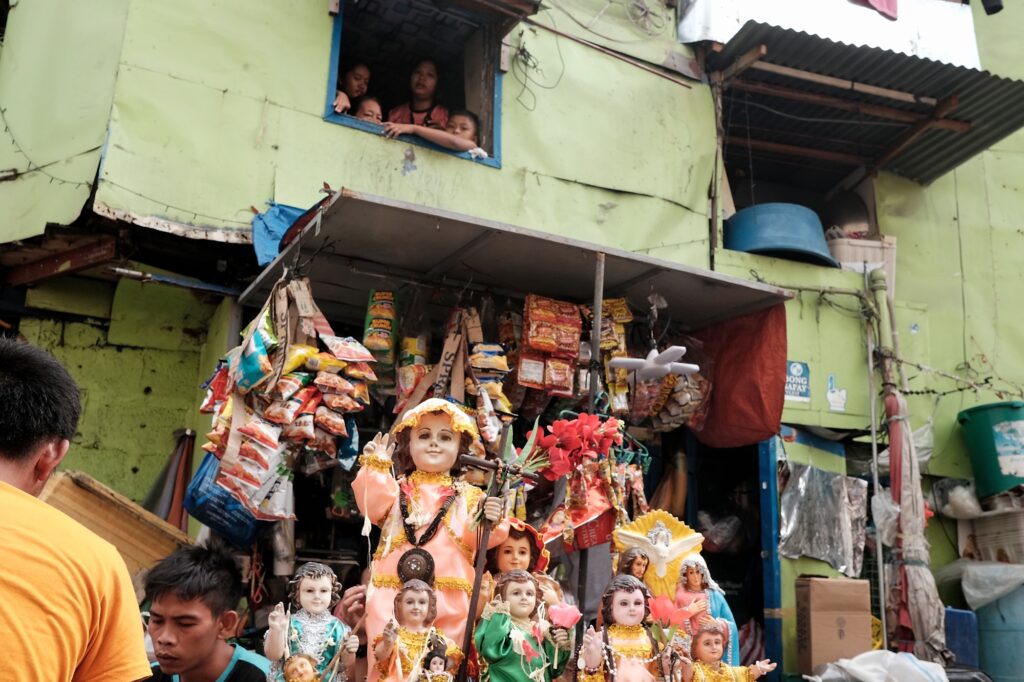
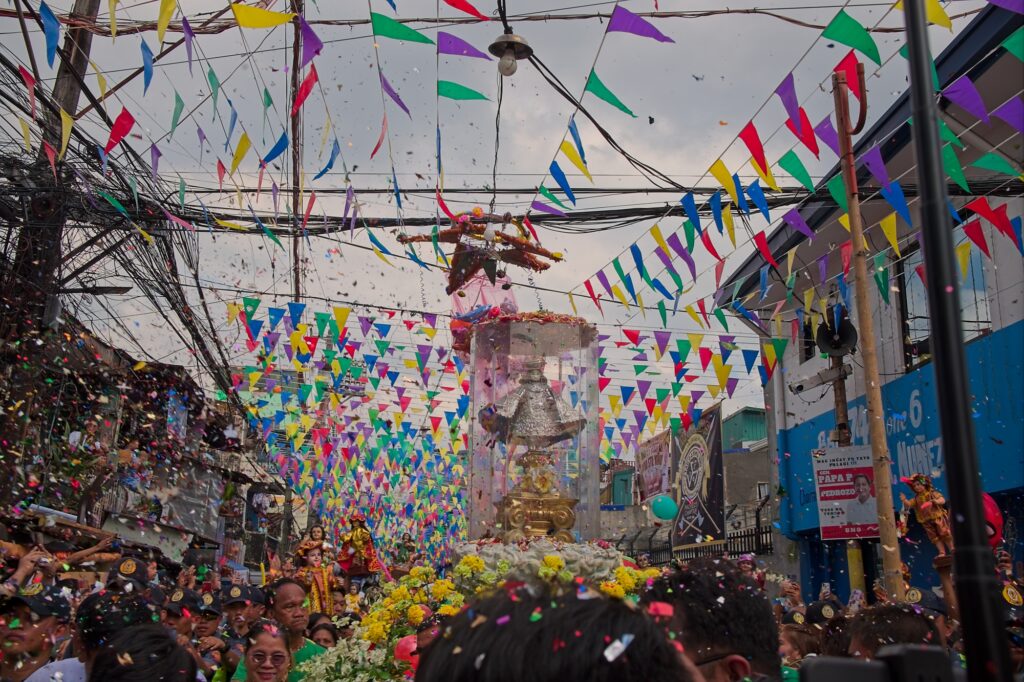
A Santo Niño devotee waits near the platform where Catholic priests and lay ministers sprinkle holy water on the image of Santo Niño during the feast day celebration on January 21, 2024, in Tondo, Manila, Philippines.
Photo and text by Deo Montesclaros
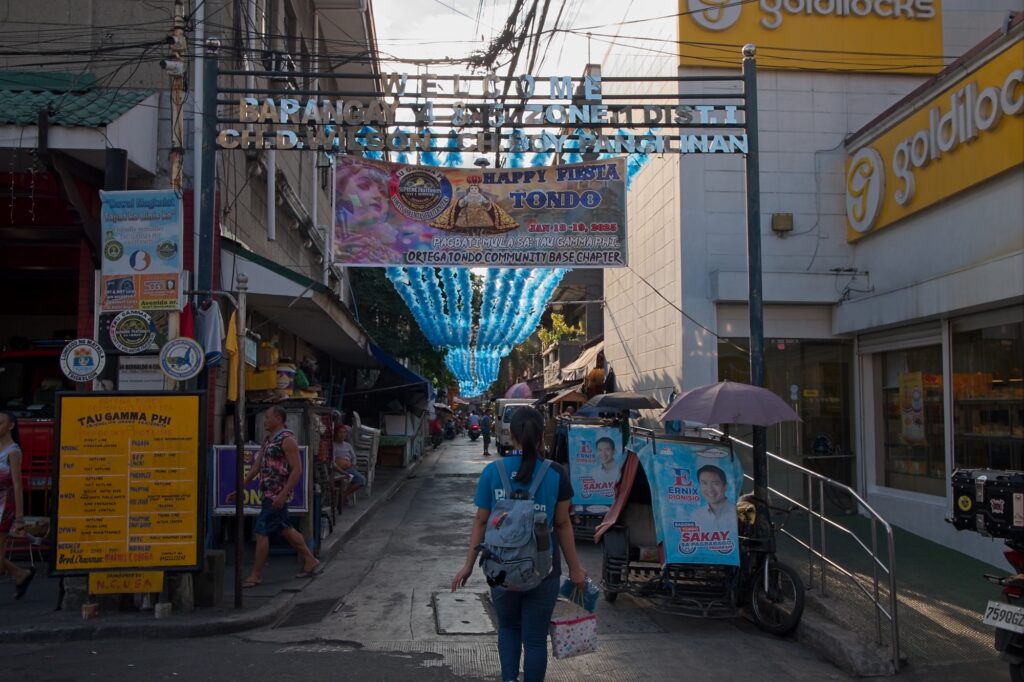
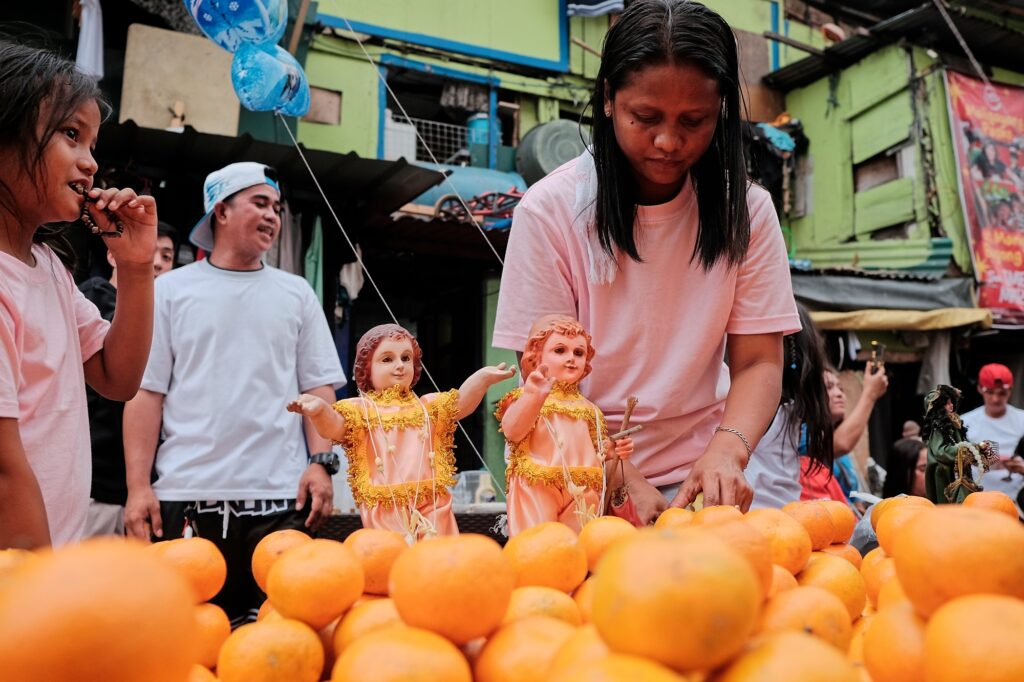
The fiesta in Tondo, Manila, is colorful and full of life. Pastel-colored banderitas hang everywhere, and loud, upbeat music echoes between narrow streets while children and adults play street games to celebrate the festivity. Images of Santo Niño (the Holy Infant), usually displayed on home altars, now adorn the streets in colorful clothes and flowers, announcing the approaching feast day.
Residents associate Tondo with the image of Santo Niño, believing it is ingrained in their identity and sense of place. Thus, celebrating the feast day is significant to every Filipino Catholic in Tondo. With its festivities, games, dances, and the famous parade of the image, it is an event eagerly anticipated and celebrated.
For some Catholic faithful, it is more than a mere festivity; Filipino Catholic devotees have experienced holy intervention in their lives through Santo Niño. They believe it is more than a festival—it is a time for thanksgiving for everything the image has done for them and their families, especially during times of adversity.
Tondo is a district in Manila, Philippines, where the Santo Niño de Tondo Parish is located. This is the largest district in Manila, with a population of approximately 637,942 as of 2024.
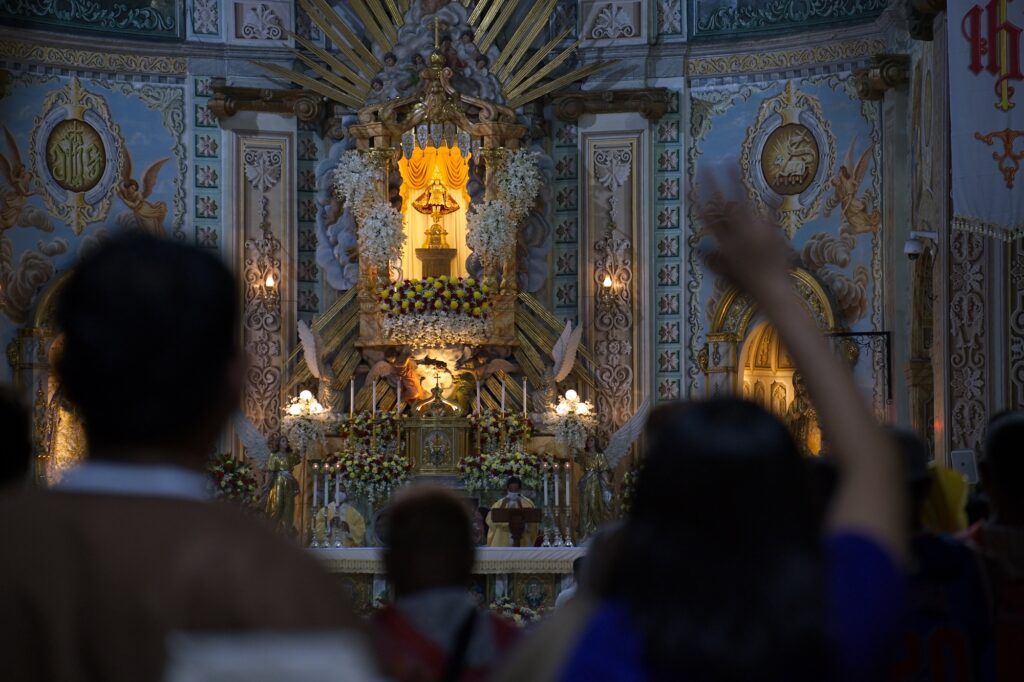
Established May 3, 1572, the Archdiocesan Shrine of Santo Niño de Tondo holds the second-oldest image of the Child Jesus in the Philippines, brought by Legazpi’s expedition. Recently elevated to minor basilica status in November 2025, this Augustinian-founded church remains a spiritual cornerstone of Manila’s oldest district.
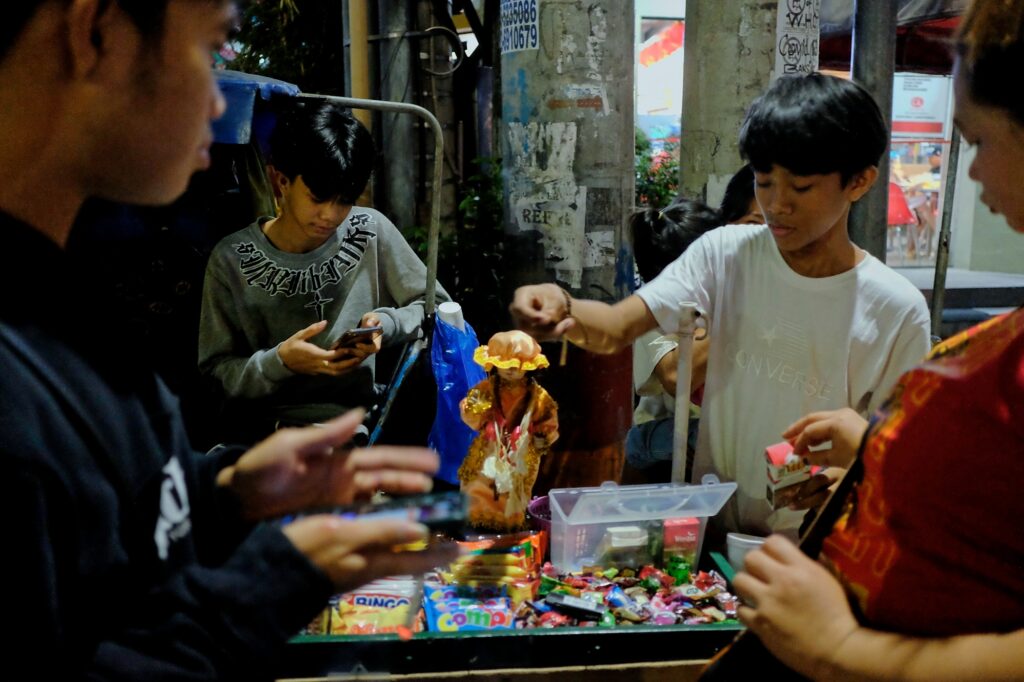
A small statuette of the Santo Niño rests on a makeshift altar set up in a narrow walkway in Tondo, Manila, Philippines.
Personal Encounters
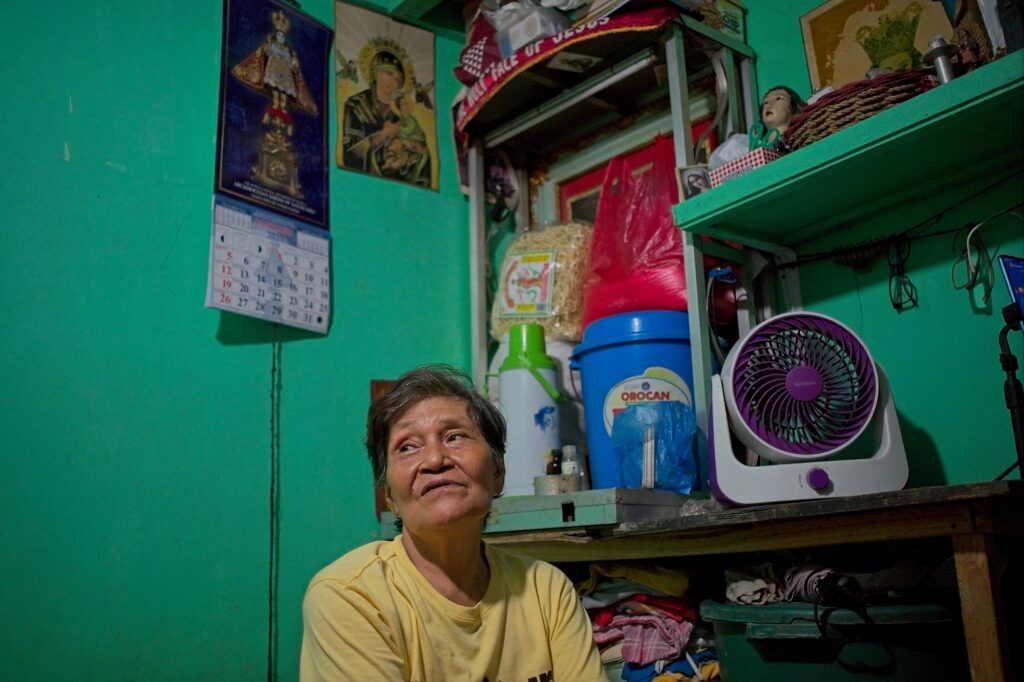
Clarita Villegas, 71, a Tondo resident, has been a devotee of Santo Niño since age five. Every day for many years, she went to church to pray for her daughter to overcome an illness.
“I went to Santo Niño every day to pray that my daughter would be cured of her sickness. She had convulsions and rashes all over her body. I did not want to take her to the hospital. I just went to church to pray,” Clarita explained.
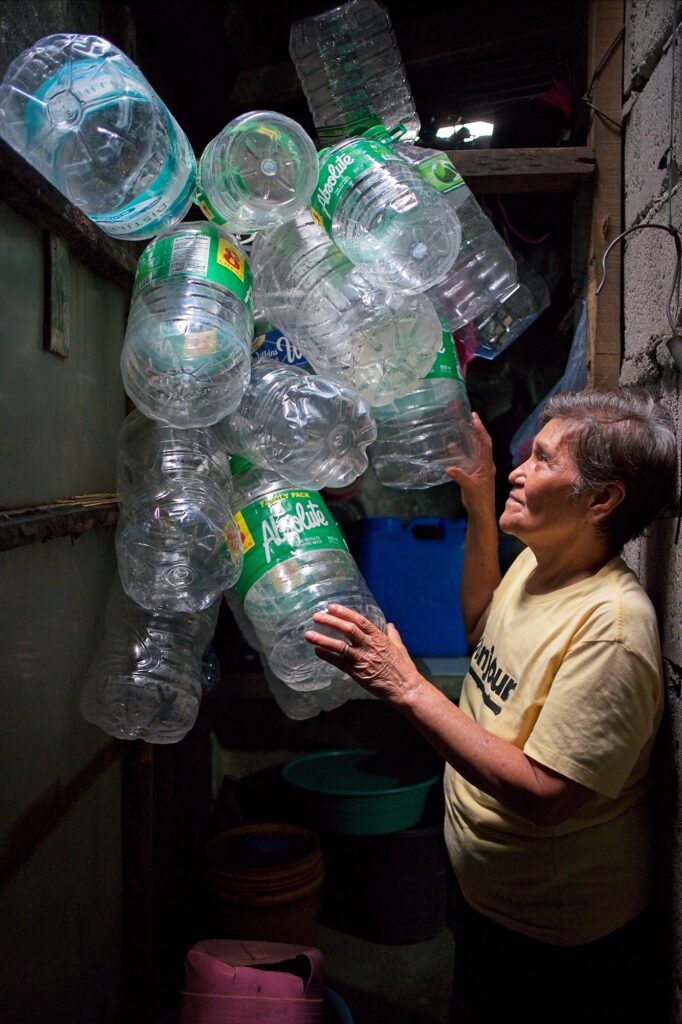
Clarita survives on odd jobs—doing laundry for others or collecting plastic bottles and containers to sell for ₱5.00 each.
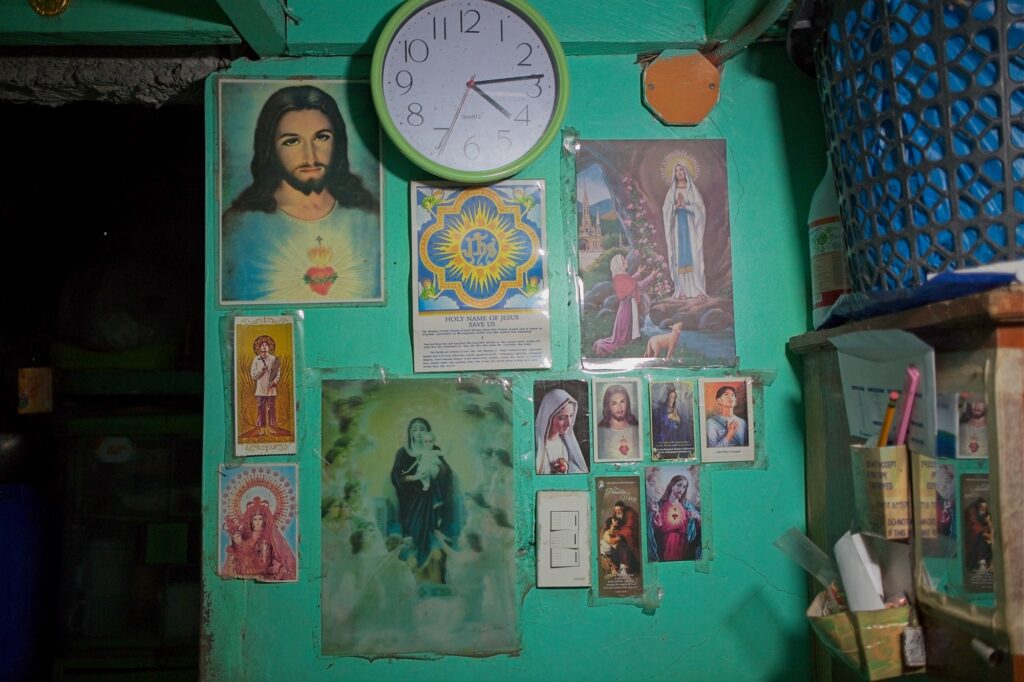
In Filipino Catholic homes, walls adorned with saints’ images become sacred spaces—where faith, family, and tradition converge in quiet devotion.
Clarita Villegas, 71, a Tondo resident, has been a devotee of Santo Niño since age five. Every day, she went to church to pray for her daughter to overcome an illness.
Clarita survives on odd jobs—doing laundry for others or collecting plastic bottles and containers to sell for ₱5.00 each.
Researchers Lagahid and Puyo aptly described this in their 2016 study, introducing the concept of Espirituhanon (spirited, enchanted):
“Espirituhanon was the concept developed to account for Cebuano behaviors that appear to be motivated by the belief in the individual’s coexistence with the incorporeal—the supernatural, souls, and divine beings.”
Filipinos have a rich experience of traditional healing practices that often correlate with spiritual beings, like Santo Niño, attributing to them the power to heal or cause illness. Thus, the faithful appeal to saints and Christian figures to enact agentive capacities in favor of devotees.
Junjun Taguinod Jr., 52, from Tondo, also shares a similar story.
His devotion to Santo Niño was passed down through his grandparents. Twenty years ago, he suffered a severe stroke, and doctors recommended major head surgery. Due to the seriousness of the situation, his mother relentlessly prayed to Santo Niño for guidance and healing. He eventually did not undergo the surgery and recovered from the stroke. They believed Santo Niño answered their prayers and attributed his healing to the image.
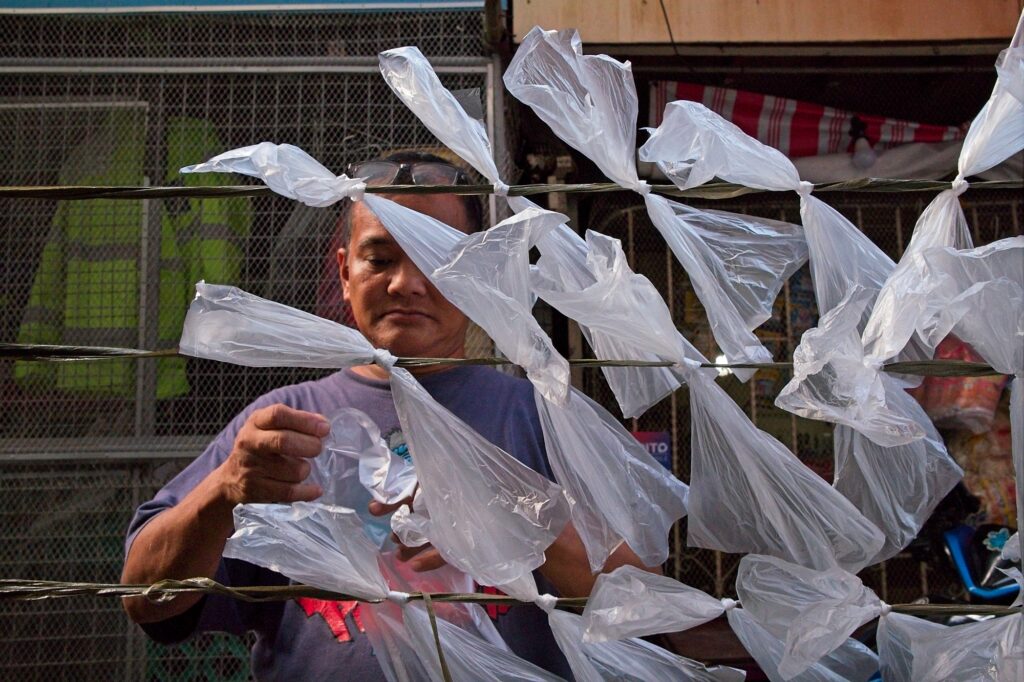
Junjun Taguinod Jr., 52, from Tondo, Manila, Philippines, is making banderitas in preparation for the feast day of Santo Nino.
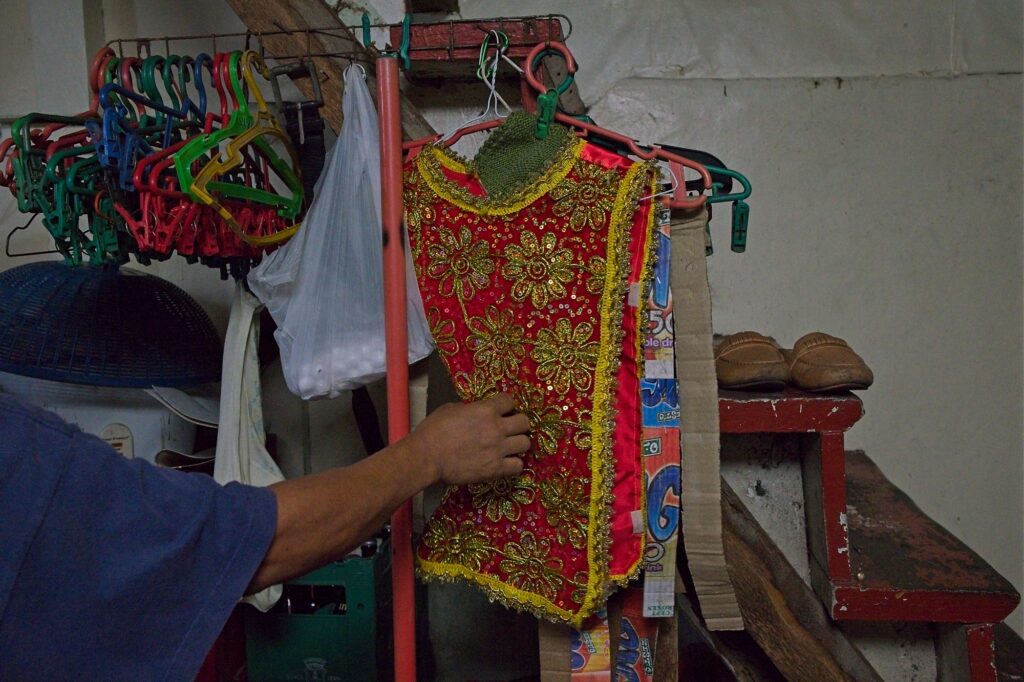
Junjun Taguinod Jr., 52, shows the cloth of his statuette of Santo Nino for the feast day. Santo Nino is always dressed in elaborate, regal robes. These are often red (symbolizing royalty and the blood of Christ) or gold /yellow (symbolizing divinity and kingship).
“I remember my mother telling me how she asked Santo Niño for my swift recovery. God had mercy on us. I thought it was the end for me. After I recovered, I met my wife, got married and had four children. I am very happy that I am alive to see my children grow,” Junjun recalled.
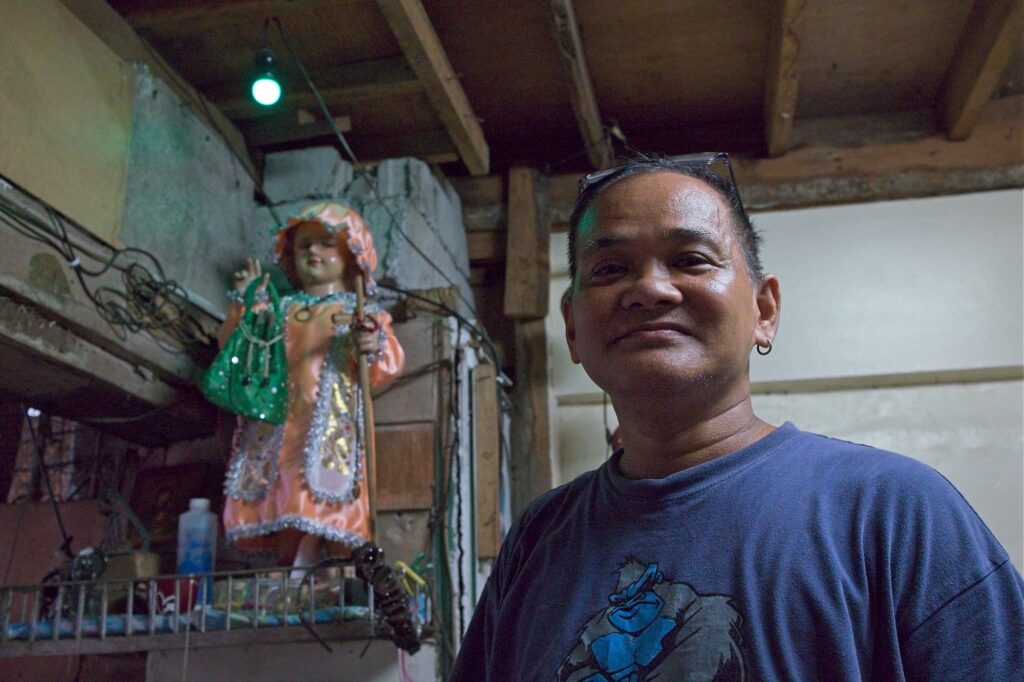
Junjun Taguinod Jr., 52, from Tondo, Manila, Philippines, pose for a photograph inside his home.
Yearly devotion and thanksgiving to Santo Niño involve participating in the feast and solemn prayer. These relational encounters are more than symbolism to them—they are testimonies of faith.
Beyond Symbolism
Dr. Amy Whitehead, a lecturer specializing in research concerning the material and performance cultures of religions, explains that there are material forms of relational agency in these encounters. In the case of Santo Niño, this includes answered prayers, enacted miracles, maintained intimate personal obligations, the recognition and rewarding of devotees’ sacrifices, and assistance through adversities.
“Objects can be ‘persons’ depending on how they are related to. This means that agency or the ‘liveness’ of objects is co-inspired and co-relational,” Dr. Whitehead explained.
This is also manifested in materially mediated tactile engagement, such as ‘Pahid sa Santo’ (anointing with the Santo), which serves as a transportability and transferability of divine power (Whitehead, 2013).
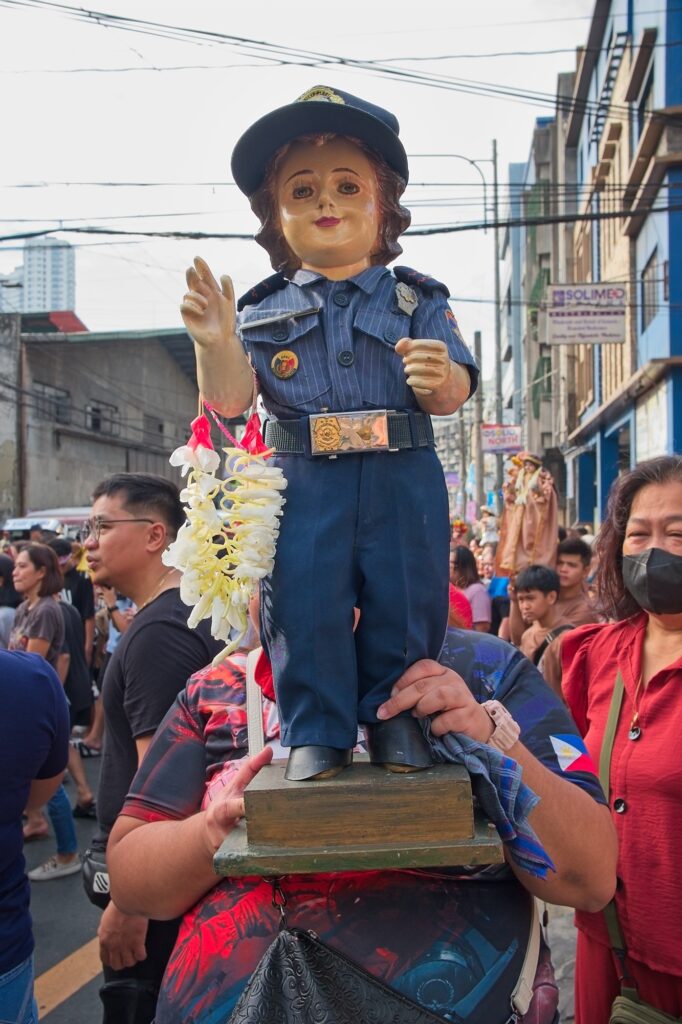
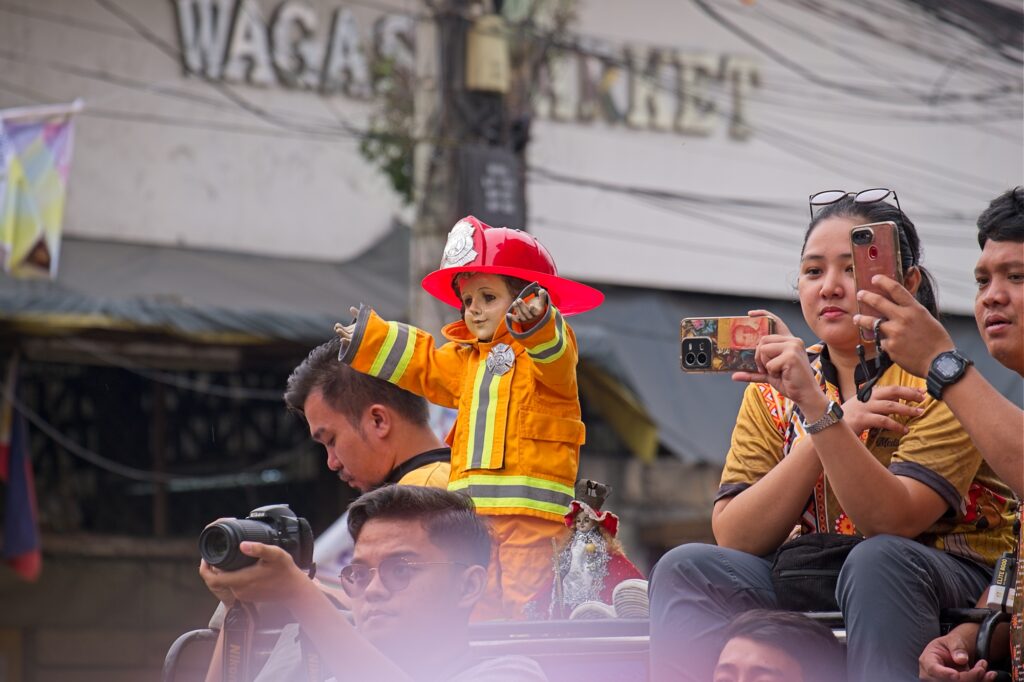
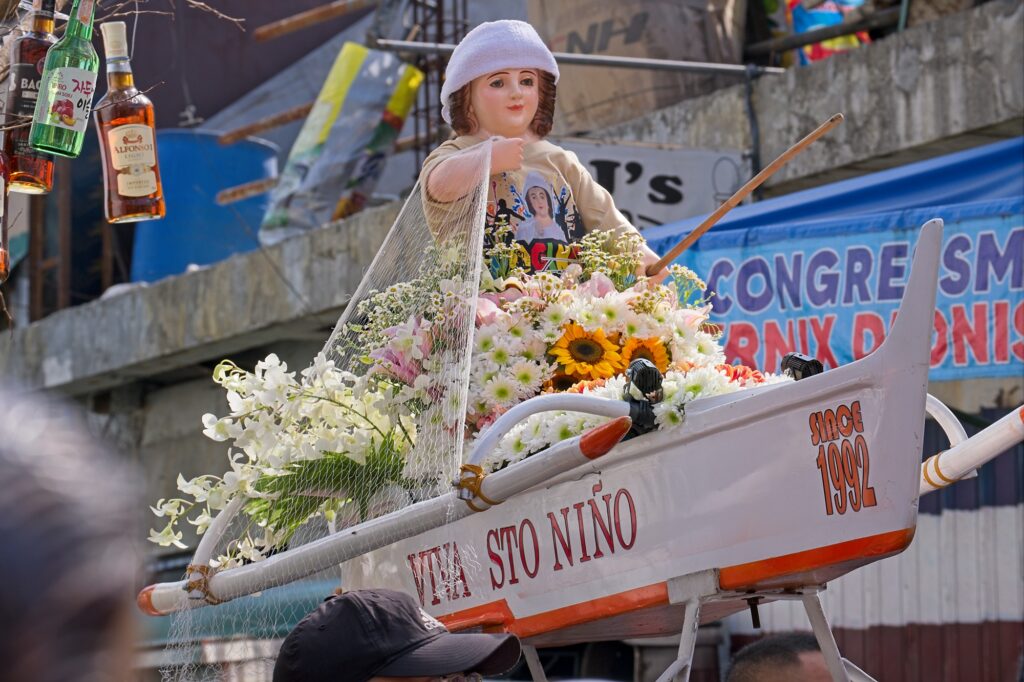
Filipino Catholic devotees parade their statuette of Santo Niño during the feast day on January 21, 2024 in Tondo, Manila, Philippines.
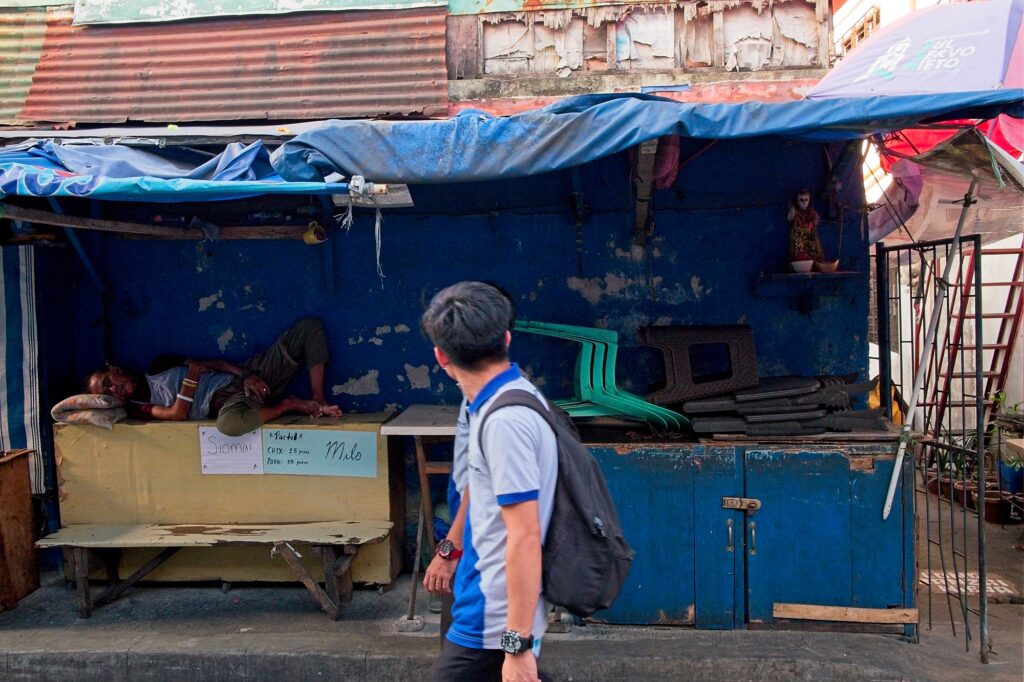
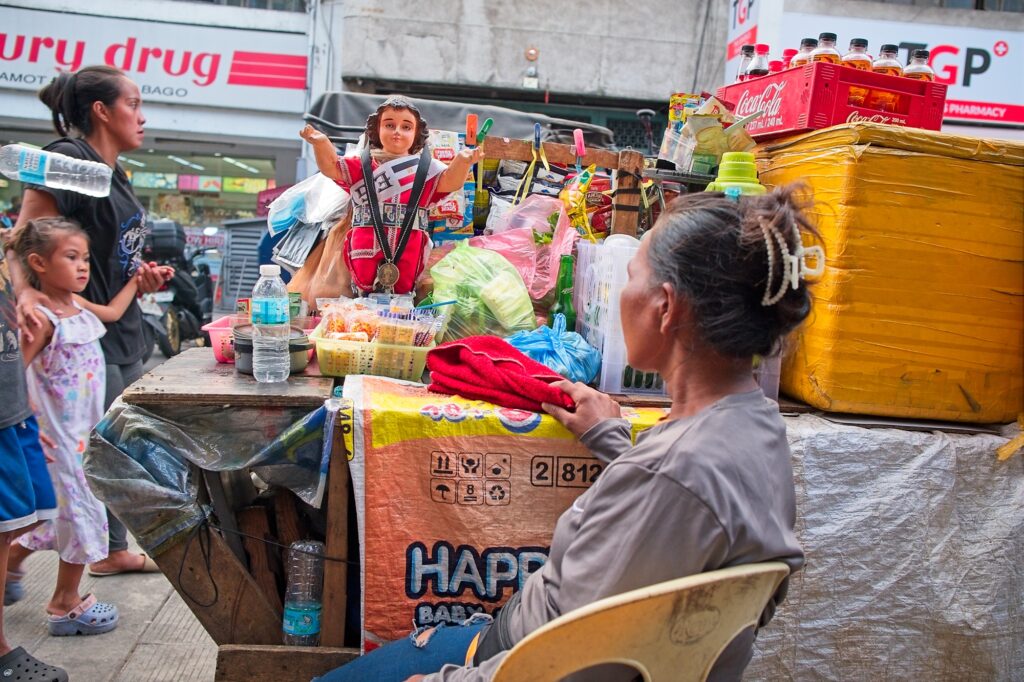
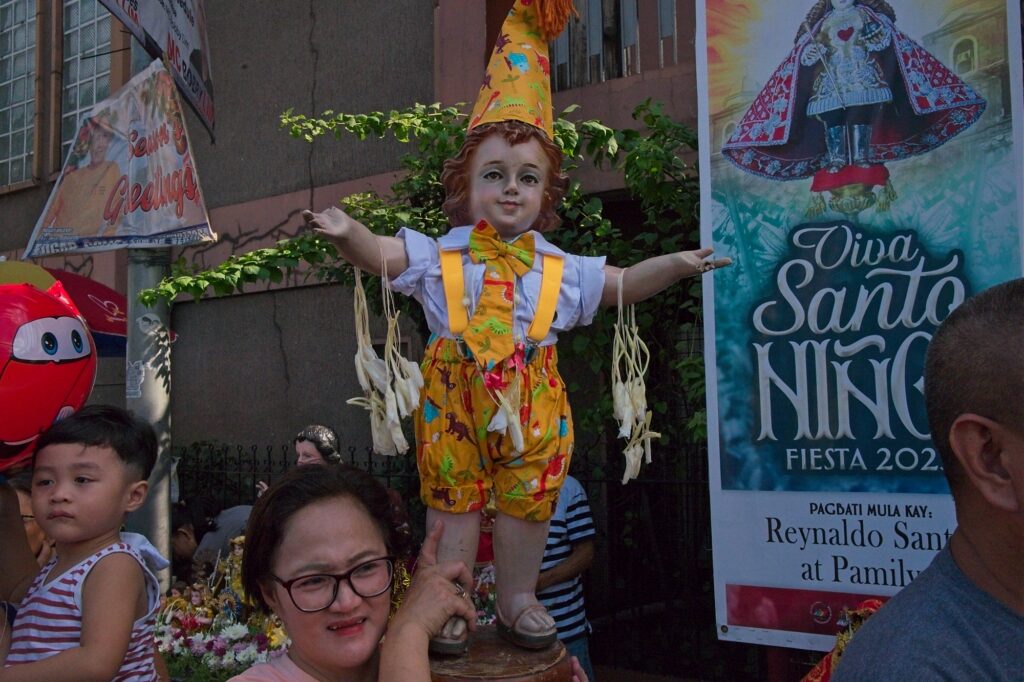
Inside the basilica, the church permits only formal gestures of faith and worship, such as bowing, waving, and kissing the image. Though devotees adhere to this, outside the basilica, their worship is more spontaneous. Statuettes of Santo Niño can be found in mundane and utilitarian places, dressed in different, colorful clothes.
Clad in colorful vestments, Santo Niño figures find their place in ordinary corners—transforming the mundane into moments of devotion.
Anthropologist Alfred Gell called this “interiority reflexive,” which signifies “the possession of mind and intentionality.” The replicas of Santo Niño are commonly dressed in clothes and tokens that correspond to the life situations of the devotees who acquire them. Thus, they are treated as persons in the most relational sense. Moreover, anthropomorphic images become communicative subjects rather than merely inert and passive objects (Alf Hornborg).
Dressed in the colors of everyday life, Santo Niño replicas mirror the hopes and realities of Filipino devotees—transforming sacred images into intimate companions on life’s journey.”
“The point here is that the way devotees engage with the Santo Niño is not merely symbolic, as though the figure ‘stands in’ or ‘represents’ a relationship to God. There are real physical interactions that derive their power and meaningfulness from the assumption that the Santo Niño itself has a substantive personhood, which is channeled in the volitional agency and intentionality that drives miraculous acts,” explained Julius Bautista, a Filipino-Australian researcher and anthropologist.