Feature photo:
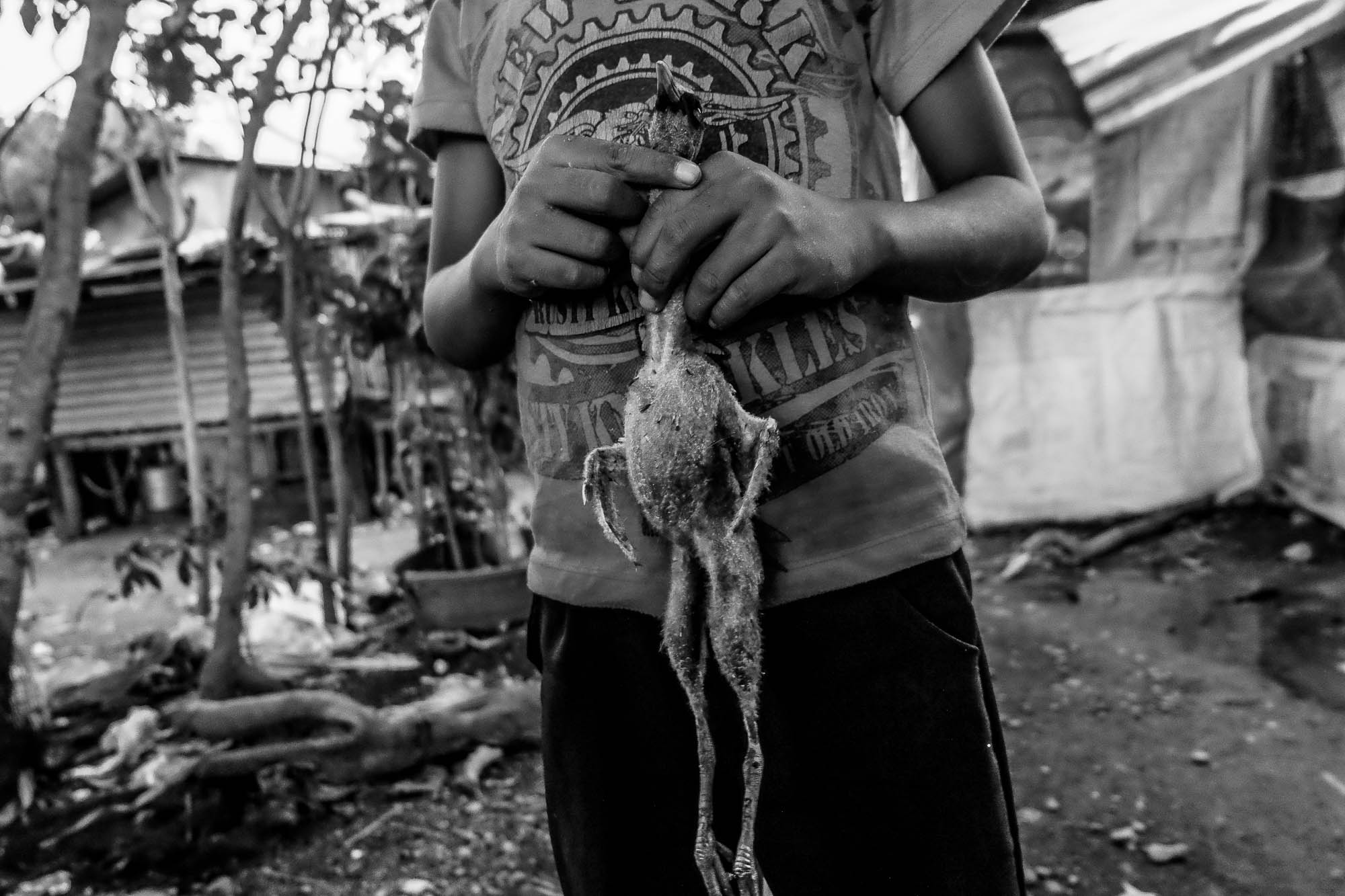
A son of a rice farm worker holds a featherless bird his father prepared for their supper after a full day of planting rice seedlings for a wealthy farmer on June 16, 2021, in Isabela province, Philippines. Because they do not have the cash to purchase food and provisions, the poor farmer settles for hunting birds in the rice fields to provide a protein-based diet.
Photos and text by Deo Montesclaros
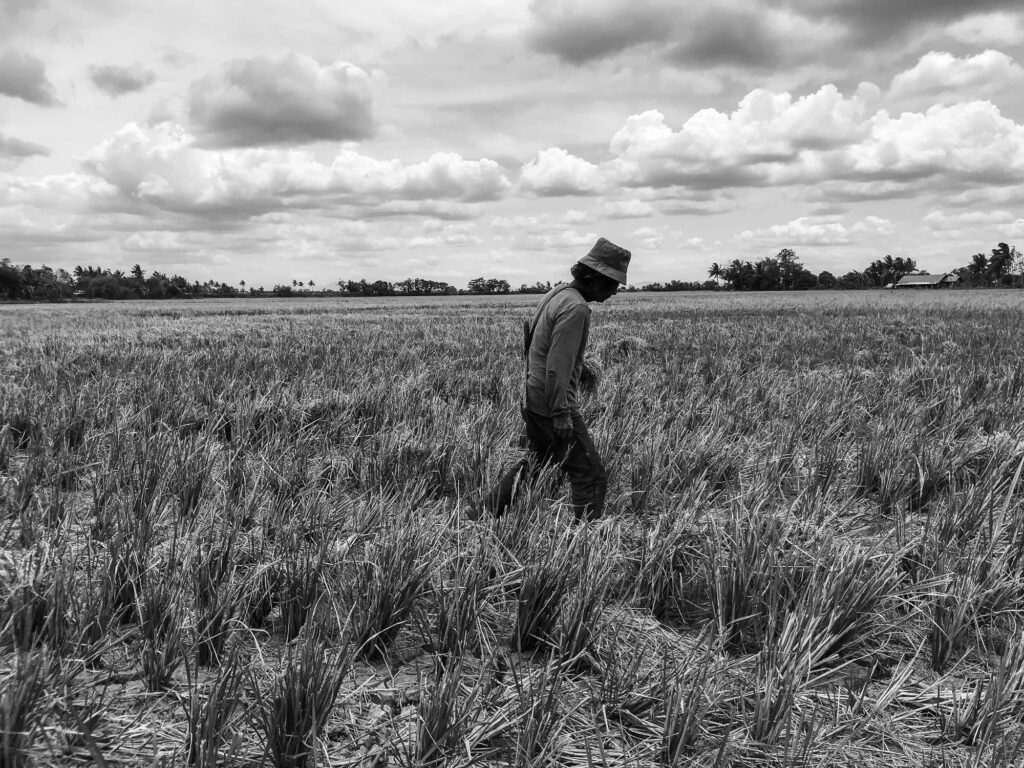
The village of Alicia is in the province of Isabela in Northern Luzon, Philippines. Since its establishment during Spanish colonial rule, farming has been the primary livelihood of its people, who have long tilled and cultivated the land for a living. Alicia lies in the flat and arable region of Isabela province, one of several areas well-suited for planting crops such as palay (unhusked rice), tobacco, and vegetables.
Over the past five years, the Cagayan Valley region has been the second-largest producer of palay in the country, yielding an estimated 3,026,087 metric tons in 2023. This represents a 3.3% increase in production compared to the 2022 cropping year, according to government data. Behind this outstanding figure are the farmers and rice farm workers.
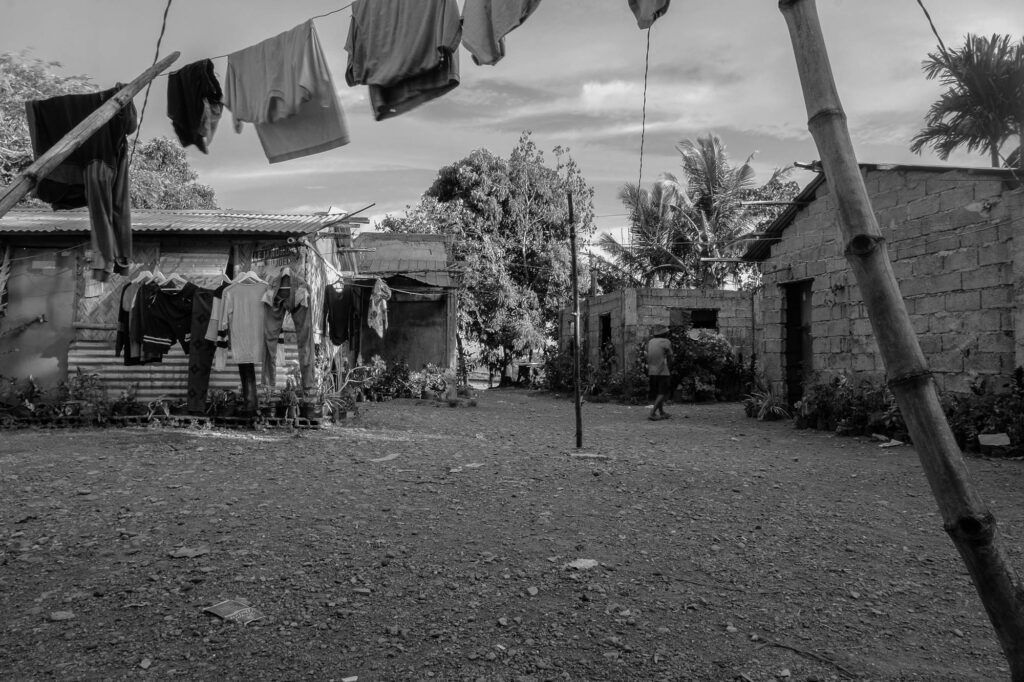
In the village of San Francisco, located in the municipality of Alicia, province of Isabela, rice farm workers live in modest houses near the fields. During the lean months of May to June, these workers seek work from wealthy farmers and landowners, offering their labor to help prepare the fields for the upcoming rice planting season. Photo by Deo Montesclaros, June 2021.
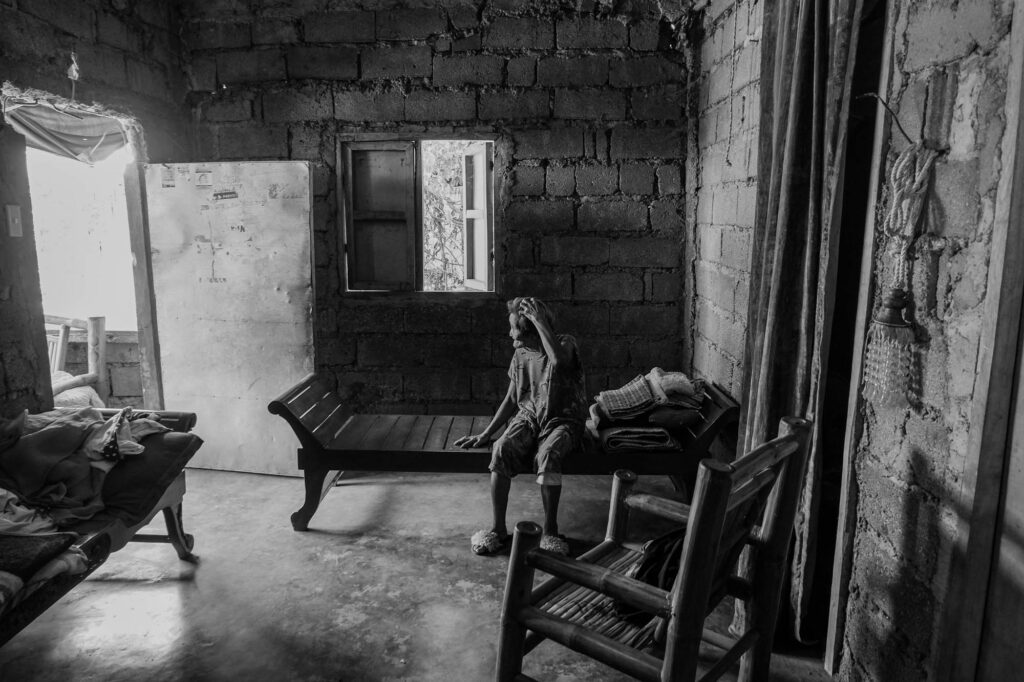
Able-bodied men and women leave their homes from morning until late afternoon to search for work during the months of May to June. Only the elderly and children remain at home. Photo by Deo Montesclaros, April 2021.
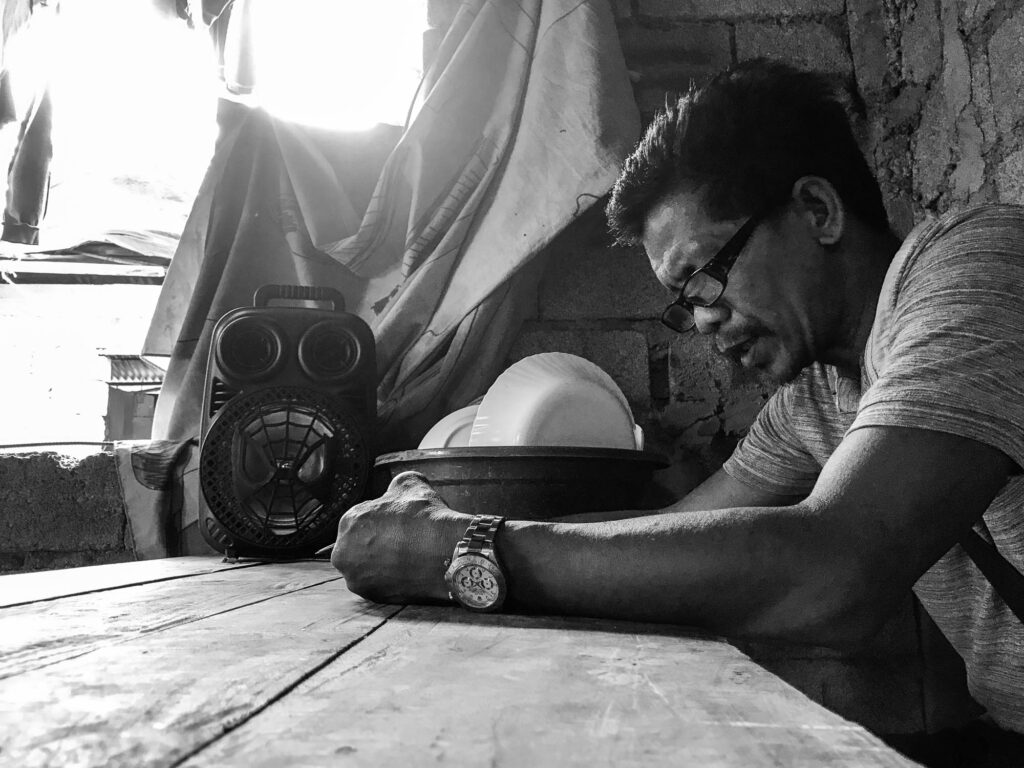
Renato Gameng inside his home in Alicia, Isabela province. Photo by Deo Montesclaros, June 2021.
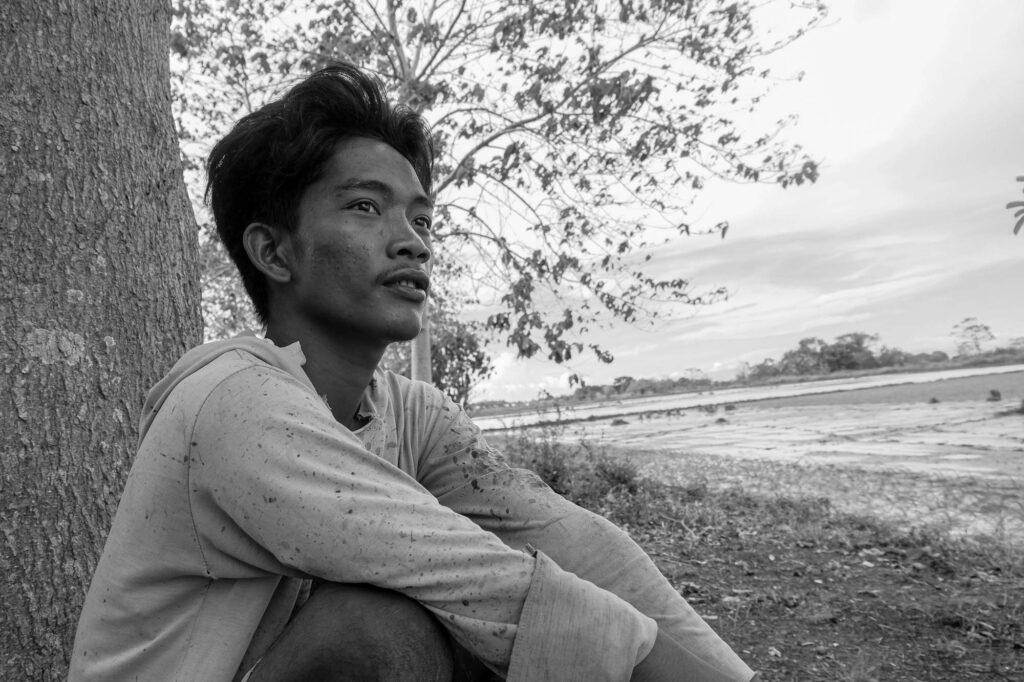
Alexis while resting during his afternoon work in the rice fields.
Photo by Deo Montesclaros, June 2021.
Renato has been a rice farm worker since 1984. He was 12 years old at the time, and like many children who grew up in farming families, farm work became his primary means of earning money. Days before the rice harvest season, they would begin sharpening their sickles—their only means of production.
“I still remember during harvest season, all my brothers and friends would go together to the rice fields. Sometimes, when we were lucky, we’d ride the ‘weapon’—a local term for the big trucks that transport harvested palay to other towns—on our way to the fields. We were a big group working for rich farmers. You could see everyone with their shiny, sharpened sickles tucked around their waists, always ready to be unsheathed whenever we saw the rice fields,” Renato recalled.
Renato’s family owned a small parcel of agricultural land. His father was a beneficiary of the agrarian reform program under President Corazon Aquino. However, to begin planting rice on their land, they had to borrow money from a wealthy farmer or landlord. They eventually tried loaning the land to a rich farmer in their village in exchange for cash to buy rice seedlings, fuel, fertilizer, and insecticide. Since Renato’s father was illiterate, the farmer tricked him into signing a document that transferred ownership of the land, effectively selling it instead of just loaning it out.
Young people also join the ranks of rice farm workers. Alexis, 18, works in the fields too. He dropped out of high school and began working with Renato’s group. Like Renato, Alexis’s family does not own agricultural land or have access to financial support for poor farmers and laborers. This is the only way he can earn money to support himself and his family.
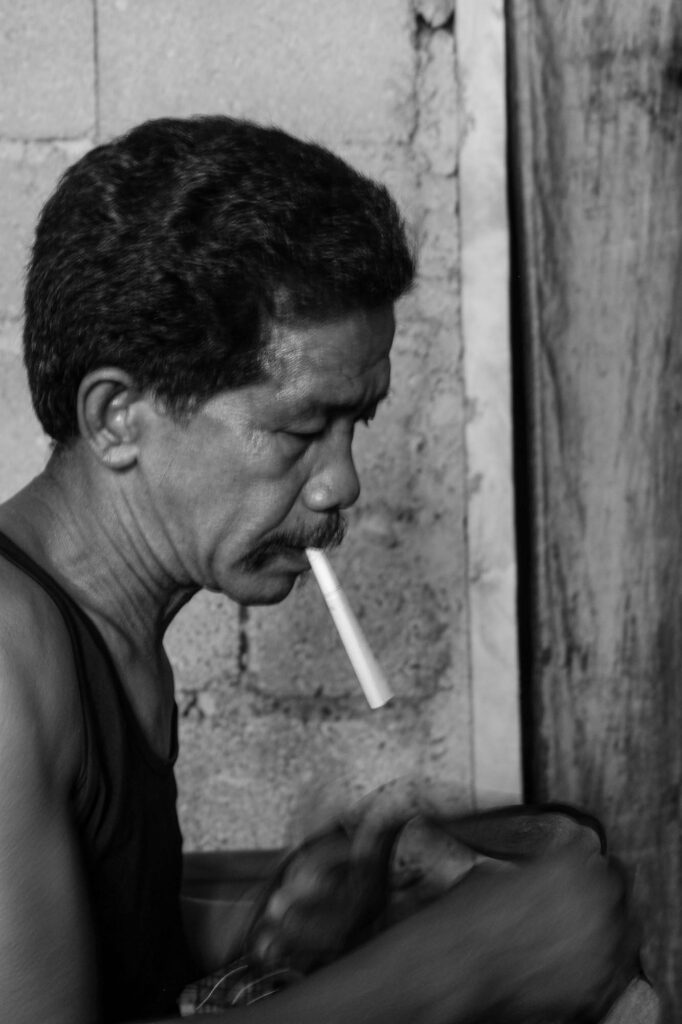
“Farming methods have improved, but farmers’ livelihoods have not. The farm
workers of the past remain farm workers today,” Renato recalled in Filipino while lighting a cigarette.
In the old system, wealthy farmers hired rice workers under a package deal. Workers planted and harvested crops in exchange for ₱5,764 during March and April (harvest season) and June and July (planting season). The second deal provided the same pay for November (harvest) and December through January (planting).
This means each farm worker would earn a total of ₱11,528 in a year . Broken down, that amounts to ₱960.78 per month, which a family has to stretch if only one member is working. They feel lucky if three members have jobs, raising the monthly total to ₱2,882 to live on.
They still face a monthly shortfall of ₱3,500 just to meet basic needs. Some farm workers take jobs as porters at rice mills, catch eels in the fields, work in construction, or harvest mung beans in nearby towns. Others have spouses who migrate for work to earn extra income.
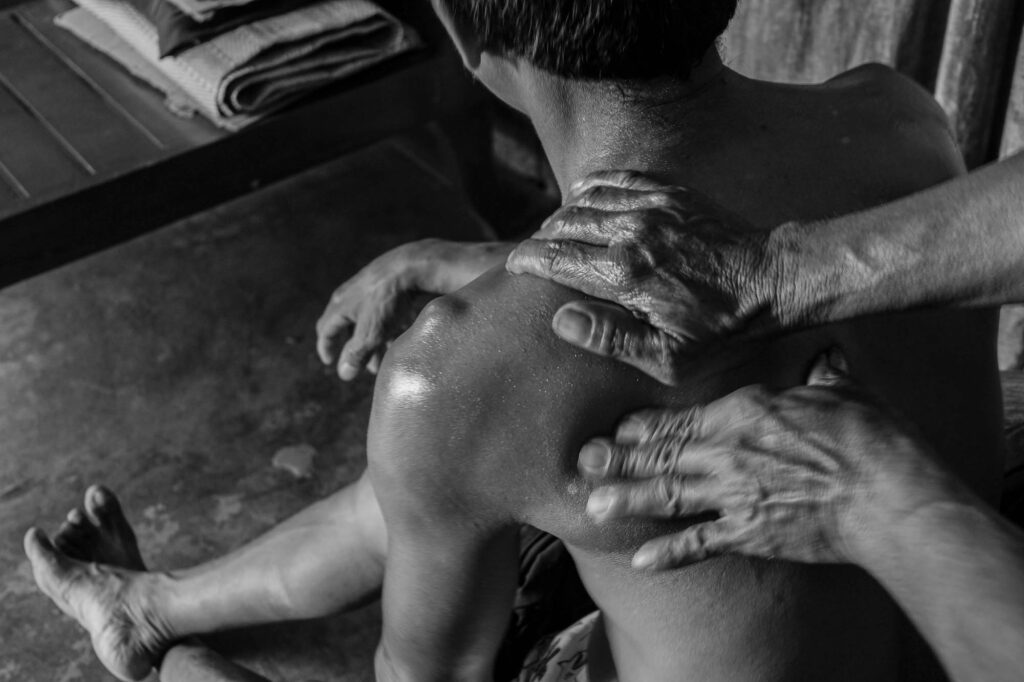
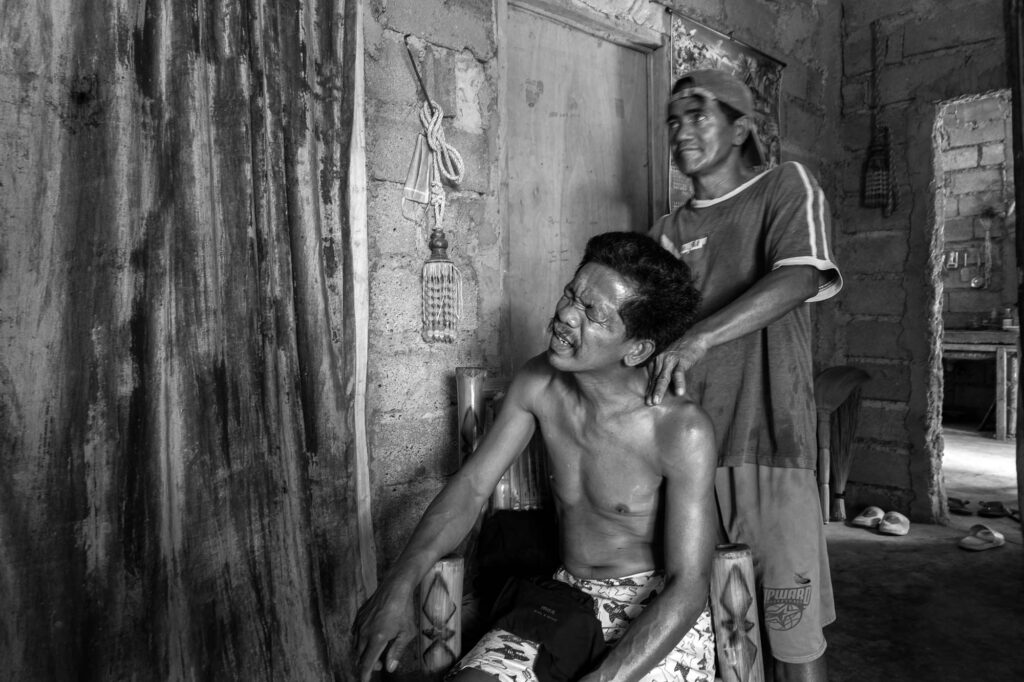
A gentle massage was exactly what Renato needed to ease the lingering pain in his left shoulder, the result of decades of working in the fields. His brother, Rogelio, is one of the community’s manghihilot (folk chiropractors) and the go-to person for rice farm workers whenever they feel pain in their bodies. Since hospitalization is prohibitively expensive in the town center, Renato and other farm workers often rely on treatment from a manghihilot. It also serves as a form of preparation and body conditioning as the rice planting season approaches in June. Photos by Deo Montesclaros, April 2021.
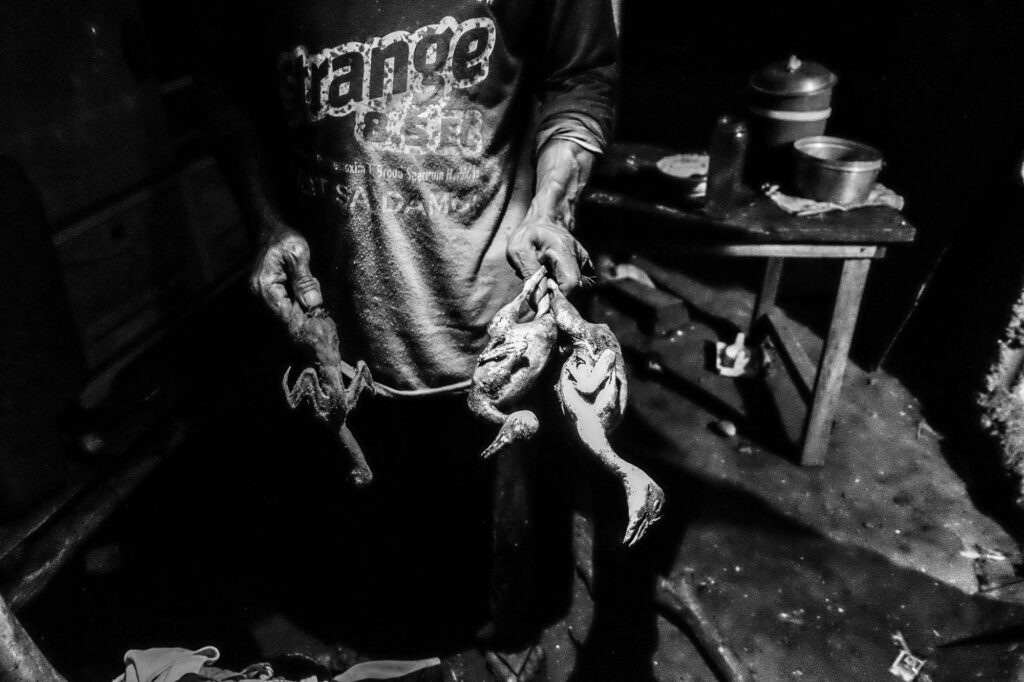
Before going home after a grueling day of work in the rice fields, a rice farm worker spent another hour or two hunting for food for dinner . After catching three wild birds, he plucked their feathers, grilled them, and then boiled them into a soup. Since their income isn’t enough to afford meat, they make do with these birds to replenish the energy lost from working in the fields. Photo by Deo Montesclaros, June 2021.
With this precarious situation, they petitioned their local government for immediate cash and food aid. They asked local organizations to help them write the petition in Filipino so that community members could fully understand what they were signing.
However, every action has an equal and opposite reaction. They also feared retaliation from the government because of their advocacy for land reform and the urgent needs of farmers during the pandemic, such as the petition.
To strengthen their case, they sought help from their nephews and nieces who were studying at university. They asked them to find a Filipino translation of the Constitution so that Renato could copy it into a notebook and discuss it with community members.
Renato believed that having the Constitution was their first line of defense in worst‑case scenarios, such as early‑morning raids by police and military forces against activists and farmer leaders.
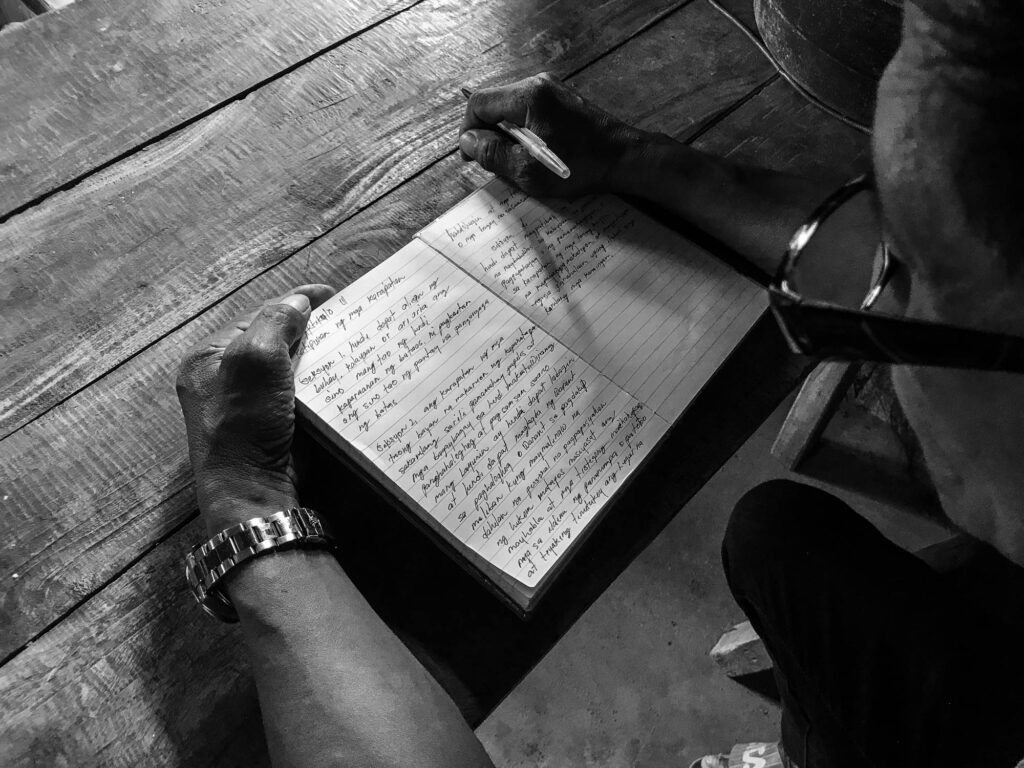
A rice farmworker in Isabela Province writes in a notebook the Filipino translation of Section 3 of the 1987 Philippine Constitution—the Bill of Rights—to better understand his rights. After a day’s work on nearby rice fields, the workers gather after dinner to discuss those rights and how to apply the provisions when police and the military attempt early‑morning raids.
Their response comes as the Duterte administration launched a brutal crackdown on civil society and people’s organizations. Early‑morning raids have become a common tactic, leading to mass arrests and, ultimately, prison sentences for those accused of carrying firearms, ammunition, or explosives.
Photo by Deo Montesclaros, April 2021
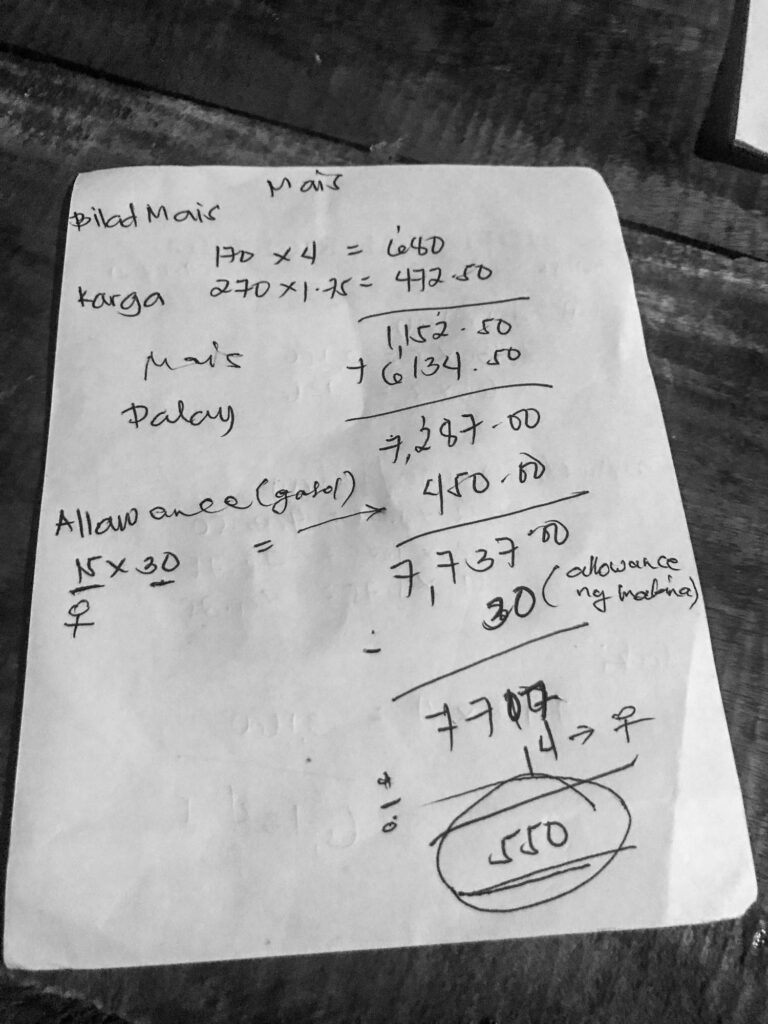
A payslip from a rice mill in Isabela Province. From morning until evening, rice farm workers haul huge cavans of palay and yellow corn and load them onto trucks for transport to Manila. The workers are usually paid as a group, with each person receiving ₱550. Photo by Deo Montesclaros, April 2021
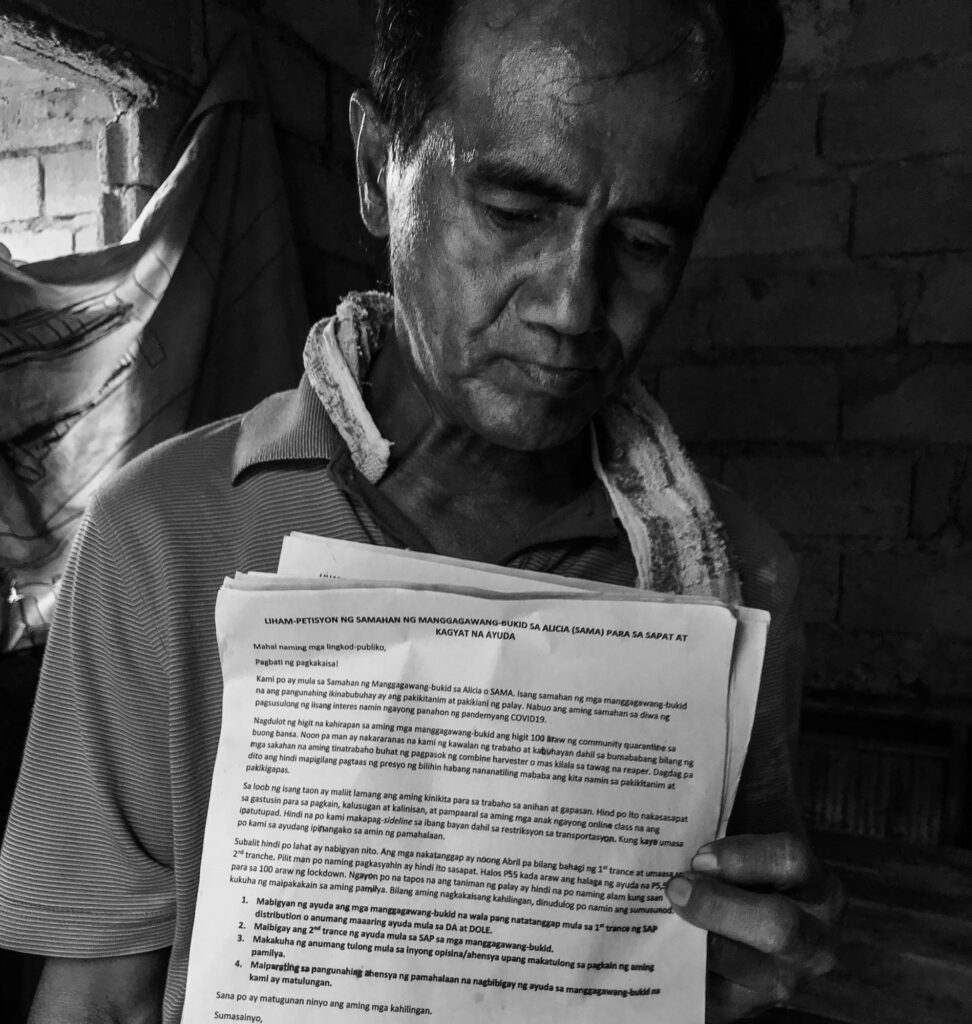
A rice farm worker holds a copy of their petition urging the local government to heed their call for immediate food and cash aid during the COVID‑19 pandemic. Photo by Deo Montesclaros, April 2021
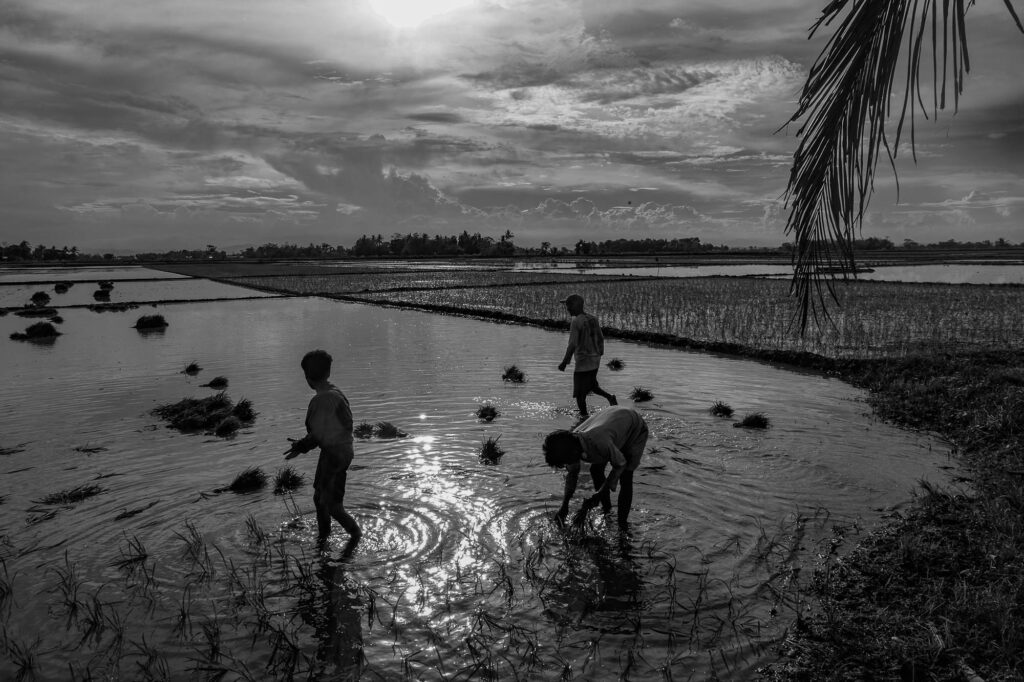
Rice farmworkers in Isabela, a province in Northern Philippines, prepare the land on 12 June 2021, for the annual rice planting season from June to August. During these months, landless farmworkers sell their labor to rich farmers and landlords to till the land and plant rice seedlings for a meager pay. Photo by Deo Montesclaros, June 2021
“Our pay per package deal might be reduced by half . There aren’t any package deals now
because we no longer receive payment for the harvest. That amount is not even enough for food. How could it cover other expenses when someone gets sick or when the children are in school?” said Rey, a rice farm worker while calculating his expenses.
“If the farmland were still ours and hadn’t been taken by wealthy farmers, there would still be a chance that the hardships we’re facing wouldn’t be this severe,” he added.
The original story was published in Filipino by Pinoy Weekly on June 1, 2021. It has been translated into English for republication, and several photos have been added to the translated version.